


O zszywkach medycznych
-
 2022-01-26
-
LEPU


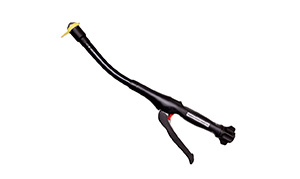
Co to jest chirurgiczny zszywacz medyczny?
A surgical Zszywacz medyczny is a device used by medical professionals to attach staples to surgical wounds. They don't look like staplers one might see in an office. Instead, they looks like staplers used for construction or industrial purposes. Surgical Zszywacz medycznys can be either disposable (made of plastic) or reusable (made of stainless steel). In either case, they are usually used with a disposable surgical Zszywacz medyczny gun.
Jak działa zszywacz chirurgiczny?
Surgical Zszywacz medycznys compress tissue and fire a staggered row of staples to connect tissue and seal surgical wounds. If necessary, some staplers also cut away excess tissue to clear the wound closure area. That said, there are different Rodzaje zszywaczy chirurgicznych that vary in how they are operated and used.
Rodzaje zszywaczy chirurgicznych
Generally speaking, most Zszywacz medycznys can be divided into two categories: linear and circular.
Liniowe zszywacze medyczne
Linear Zszywacz medycznys contain a handle on the other end of the jaws. Surgeons use this handle to manipulate medical staples to seal the wound.
The detailed working process sugical stapler are like: every time a surgeon fires a Zszywacz medyczny, Zdarzają się dwie rzeczy:
Rząd zszywek wystrzeliwuje ze zszywacza medycznego, aby skleić tkankę razem;
Ostrze odcina nadmiar tkanki, aby lepiej uszczelnić ranę.
Currently, there are two types of Zszywacz liniowy: ordinary linear Zszywacz medycznys and linear cutting machines. The latter performs the cutting function, while the former does not. They have different surgical uses.
Okrągłe zszywacze medyczne
The circular Zszywacz medyczny fires rows of staples in a staggered way. Due to their circular structure, these Zszywacz medycznys are often used to connect parts of tubular organs or other structures in the body.
Zszywacze skóry
Skin staplers are another type of surgical Zszywacz medyczny. They are designed to seal wounds in areas with greater skin tension, such as on the skull.
Czy chirurgiczne zszywacze medyczne są niebezpieczne?
Zszywki chirurgiczne mogą mieć więcej zalet niż tradycyjne szwy. Wiele zszywaczy nedical jest bezpiecznych i są często używane w różnych procedurach medycznych, ale to nie znaczy, że nie są one pozbawione niebezpieczeństw. Na przykład urządzenie może się nie wystrzelić lub nie wystrzelić w pełni lub może nie uszczelnić prawidłowo rany lub prawidłowo połączyć tkanki z powodu niewłaściwego postępowania personelu medycznego. Może to spowodować poważne obrażenia, a nawet śmierć. Jeśli pacjent przeżyje szczęśliwie, może również ponieść długotrwałe lub trwałe uszkodzenie, które może kosztować go lub ich rodzinę dużo pieniędzy. Dodatkowo, niezależnie od tego, czy zszywacz medyczny działa prawidłowo, istnieje ryzyko, że sami lekarze mogą wziąć na siebie odpowiedzialność, ponieważ nie uszczelniają prawidłowo ran lub nie łączą tkanki. W wyniku tych niebezpieczeństw wiele osób złożyło pozwy przeciwko producentom i stronom powiązanym.
However, with the advancement of science and technology, medical devices are constantly updated and developed. We can't deny that the application of Zszywacz medycznys makes surgical operations safer and easier. Medical stapler do improve the life quality, and bring many benefits to patients. Meanwhile, compared with traditional open surgery, more mature minimally invasive surgical techniques have become the unremitting pursuit of surgeons. The operation scope is expanded, and the operation time is shortened, at the same time, and the safety of the operation is improved.