


Jakie są rodzaje dializatorów?
-
 2021-12-01
-
LEPU


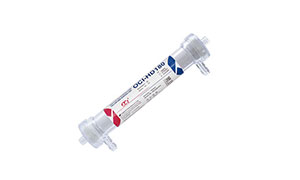
Dializator składa się z błony dializacyjnej i jej struktury nośnej zastępującej nerkę. Membrana dializacyjna jest główną częścią dializatora, który oddziela krew od dializatu. Podczas dializy krew i dializat przepływają w przeciwnych kierunkach po obu stronach membrany, a woda i substancje rozpuszczone są wymieniane przez półprzepuszczalną membranę. Wydajność dializatora determinuje efekt leczenia dializą i jest ważnym czynnikiem odniesienia dla rozwoju programów hemodializy.
The characteristics of the Hemodializator are composed of two parts: design characteristics and working characteristics. Design features include the configuration of the Dializator, the pre-charge of the blood chamber and the dialysate chamber, the type of membrane, and the biocompatibility. Working characteristics include the transfer rate of different solutes and water. There are several classification methods for Dializators.
Ⅰ. Klasyfikacja według konfiguracji dializera
Dialyzers are divided into tube type, flat type, and hollow fiber type. At present, the commonly used Dializators are hollow fiber type, and the flat-type and tube-type Dializators used in the early days have been basically eliminated.
The Dializator z pustymi włóknami is composed of 8000-12000 hollow fibers, the fiber inner diameter is 200-300um, and the wall thickness is 2-30um. The hollow fibers are bundled into bundles and placed in the formed Dializator casing, and the casing and the dialyzing membrane are sealed with polyurethane. The blood flows through the hollow fibers, and the dialysate flows in the opposite direction outside the fibers.
W. Klasyfikacja według materiału membranowego dializera
Zgodnie z materiałem membranowym dializery można podzielić na 4 kategorie:
1. Regenerated cellulose membrane Dializator, including copper imitation membrane and copper ammonia membrane Dializator. There are free hydroxyl groups on the surface of cellulose, which can react with blood components and has poor biocompatibility. After the Cupra treatment, the fiber surface is smoother and the biocompatibility is improved.
2. Acetate cellulose membrane Dializator. The cellulose is acetylated before the film is formed, which improves the biocompatibility and performance of the film.
3. Replace the fiber membrane Dializator. Blood imitation membrane is an alternative copper imitation membrane because its surface-free hydroxyl groups are covered by tertiary ammonia compounds, which have good biocompatibility.
4. Synthetic fiber membrane Dializator. Materials for this Dializator include polyacrylonitrile, polymethylmethacrylate, polysulfone, polycarbonate, polyethylene, and polyamide. They have a higher transport coefficient and ultrafiltration coefficient, better biocompatibility, but a higher price.
Ⅲ. Klasyfikacja według współczynnika ultrafiltracji dializatora
According to the ultrafiltration coefficient, there are two different Typy dializerów:
1. Low ultrafiltration coefficient Dializator. Ultrafiltration coefficient <15ml/(mmHg.h㎡), including copper imitation membrane, cuprammonium membrane, blood imitation membrane, and cellulose acetate membrane.
2. High-throughput and high-efficiency Dializator. Ultrafiltration coefficient> 15 ml/(mmHg.h㎡), has a very high removal rate for medium molecular weight substances and can remove large molecular weight β2-microglobulin and other macromolecular substances. Typical high-efficiency Hemodializators include polysulfone membrane series, PAN membrane, PMMA membrane, and cellulose acetate membrane Dializator.
Mogą Cię również zainteresować następujące produkty:
Jeśli masz pytania, możemy Ci pomóc!